Last updated November 21, 2026
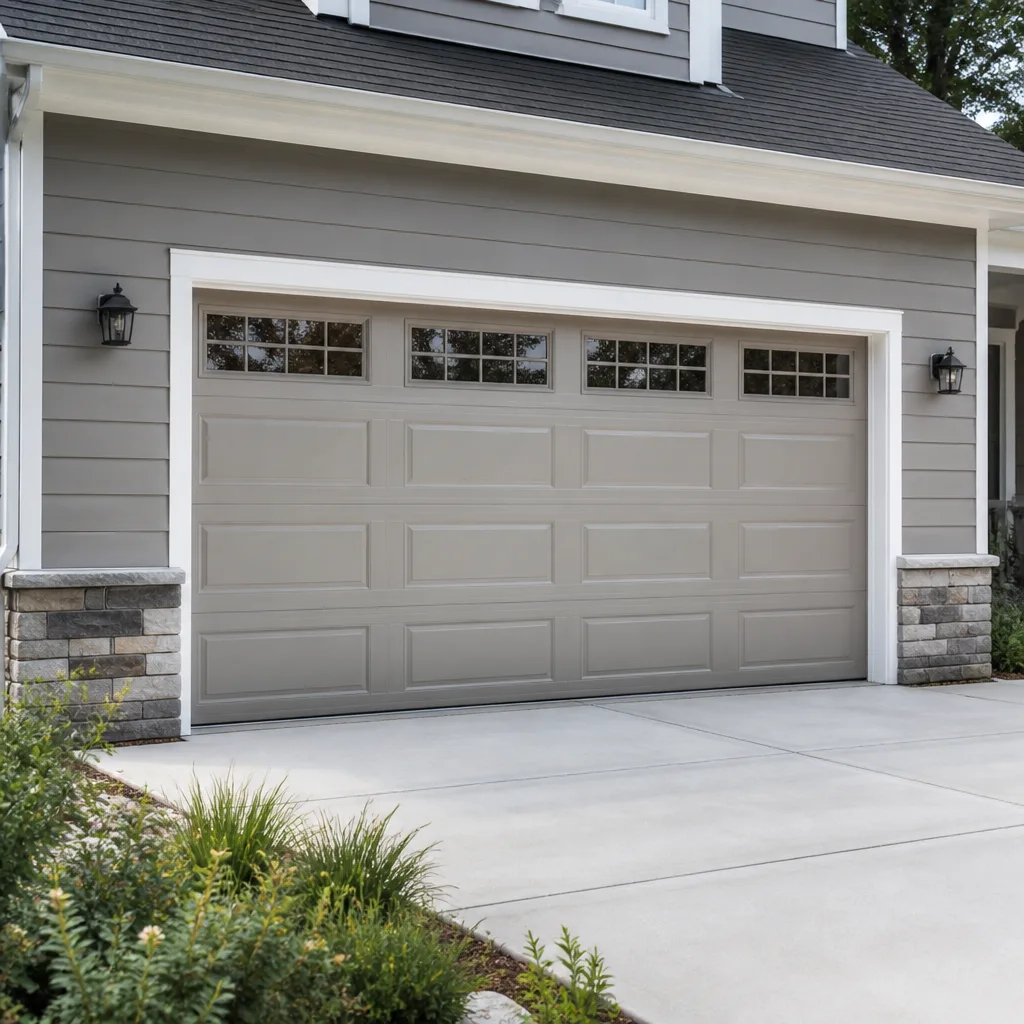 Raised-panel steel
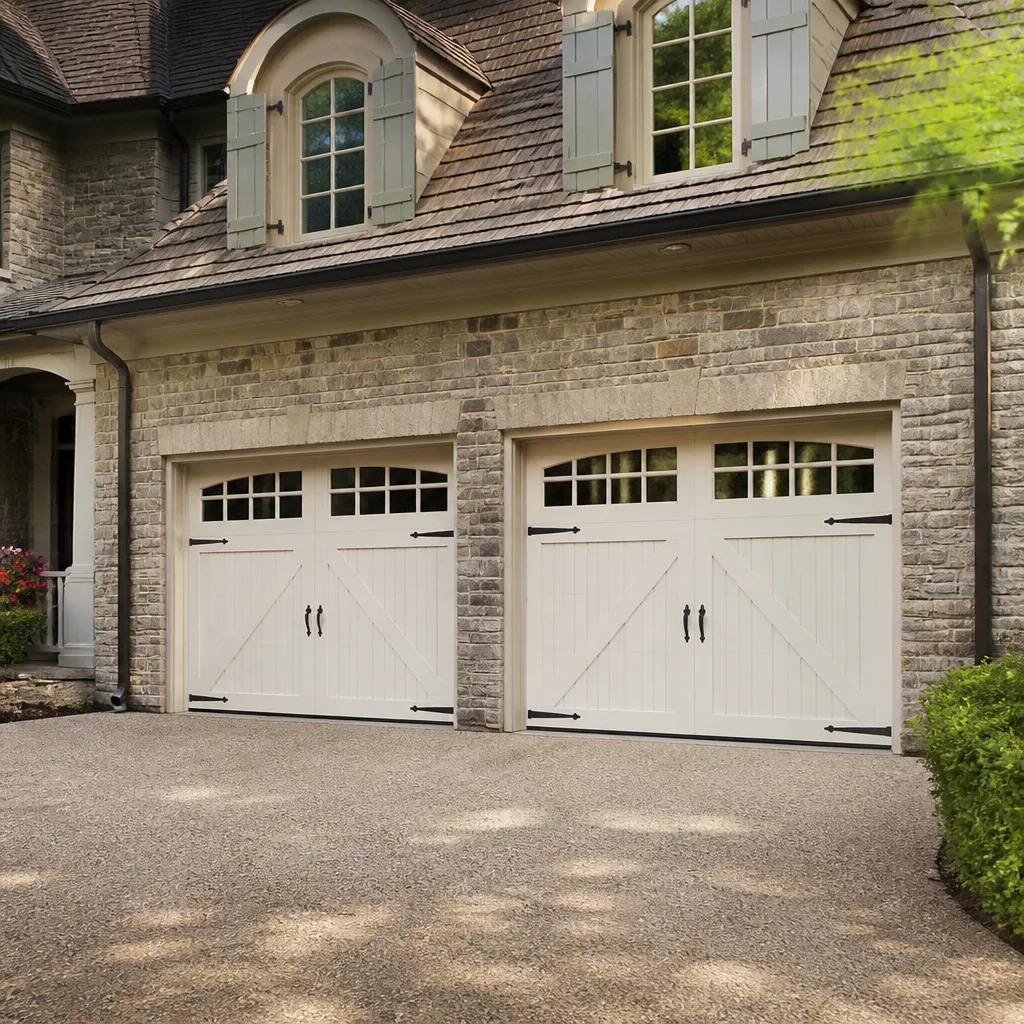 Carriage house
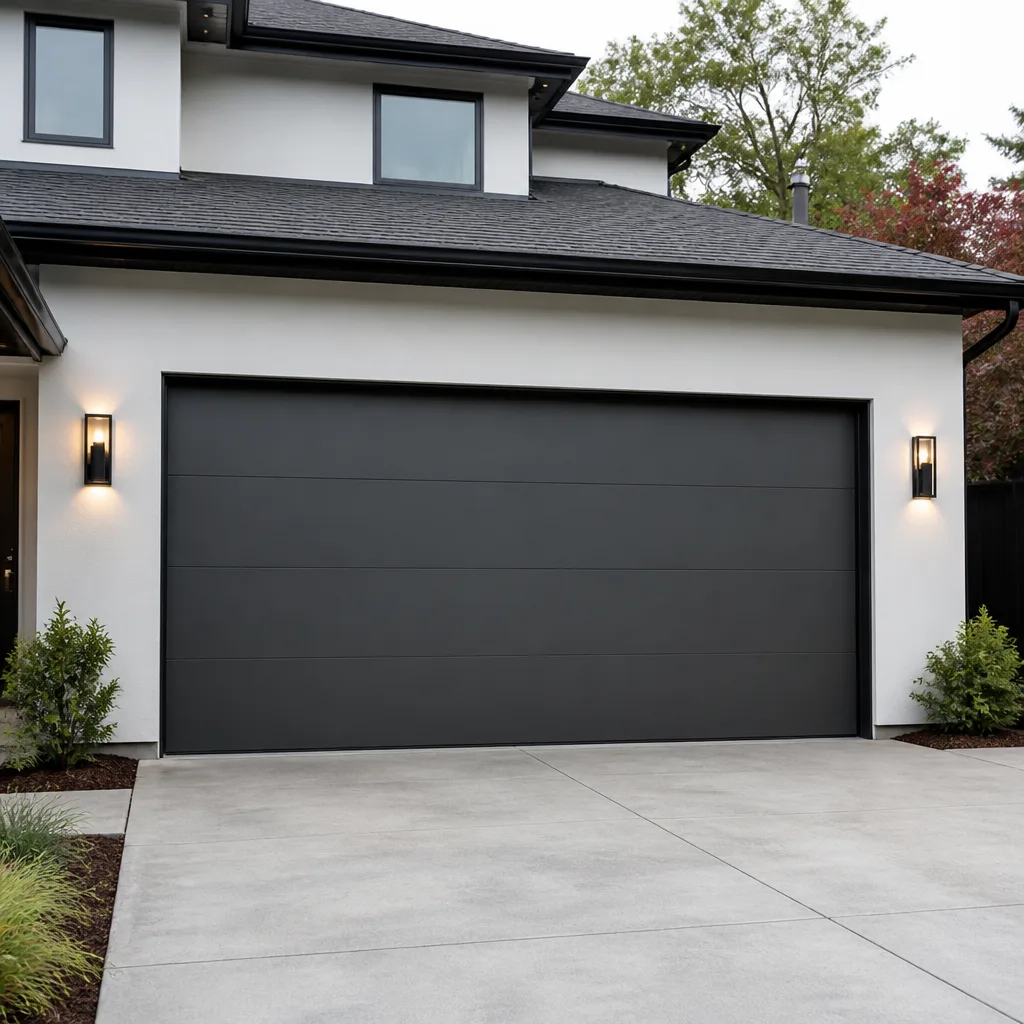 Modern flush
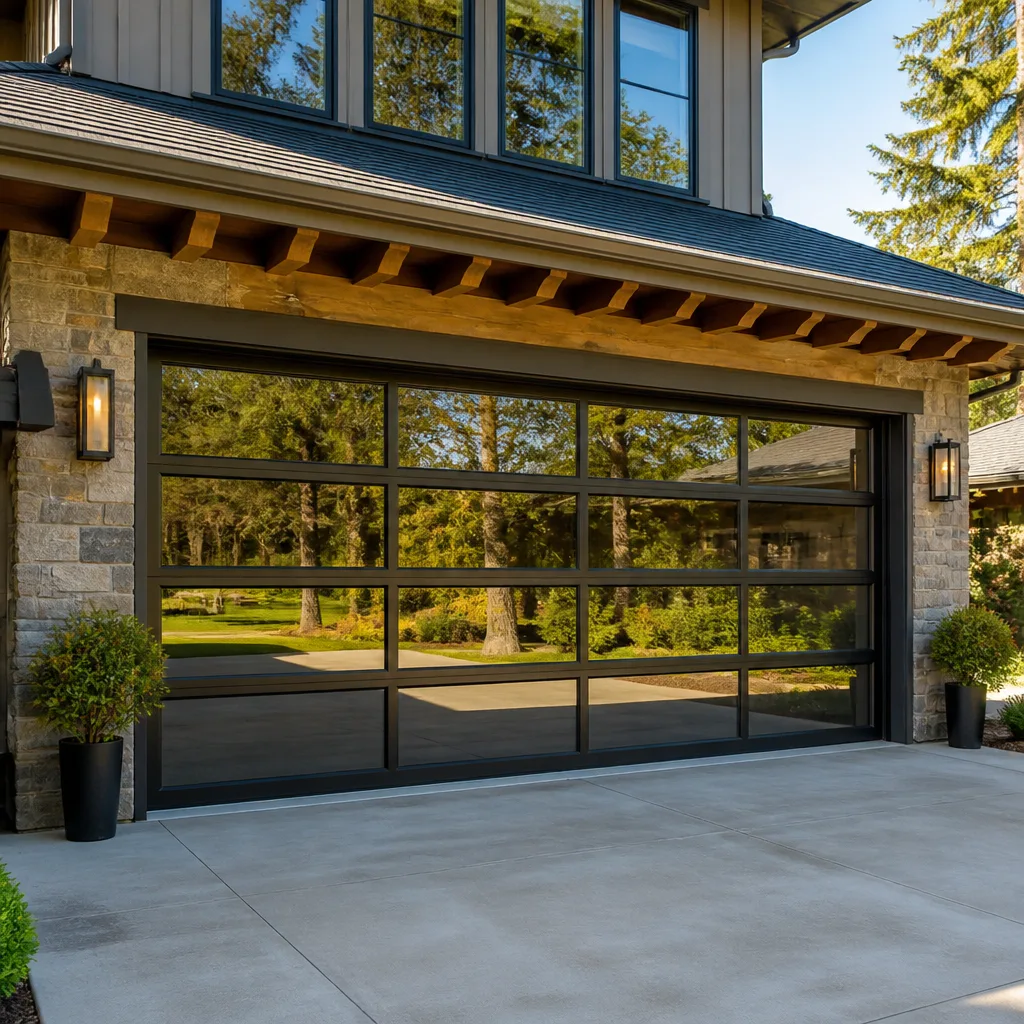 Full-view glass
 LiftMaster openers
 Chamberlain openers
Full 25-point door and opener safety check with every visit - springs, cables, rollers, tracks, and your LiftMaster or Chamberlain opener included
You get a price before we start. It does not change when the pro arrives.
Get your free estimateThe Complete Guide to Garage Doors in Bowie
Most Bowie homes went up when a 7-foot-high garage door was the standard, and that single fact trips up more replacement projects than any other. A homeowner measures the opening, orders what looks like a “standard” door online, and finds out at delivery that the height, the headroom above the track, or the spring setup doesn’t match what the house actually has. The garage door is the largest moving object on a house, and in Bowie’s colonial and split-level neighborhoods it was installed to fit a specific era of construction, not a catalog. This guide walks through what that means for repairs, replacements, and the decisions in between.
Quick Answer
Garage door work in Bowie comes down to matching the door and its components to the home’s construction era. Colonial and split-foyer houses built from the 1980s through the 2000s typically use 7-foot doors in a narrow set of widths, and their torsion springs, bottom seals, and openers are the parts that fail first under Prince George’s County’s freeze-thaw swings and summer humidity. Repair usually costs far less than replacement, and the right call depends on the condition of the springs, panels, and tracks rather than the age of the door alone.
Styles & brands we work with
- Raised-panel steel
- Carriage house
- Modern flush
- Full-view glass
- LiftMaster openers
- Chamberlain openers
Table of Contents
- How Bowie’s Housing Stock Shapes Your Garage Door
- What Bowie’s Climate Does to Door Components
- Reading Your Home’s Age to Predict What’s Overdue
- What Garage Door Work Typically Costs in Bowie
- Repair or Replace? A Decision Framework
- Multi-Brand Repair vs. Single-Brand Dealers
- Which Jobs Need a Permit in Prince George’s County
- A Seasonal Inspection Checklist
How Bowie’s Housing Stock Shapes Your Garage Door
Walk through neighborhoods like Belair Village, Pointer Ridge, or Meadowbrook and the pattern is obvious once you look for it: attached two-car garages front and center on colonials and split-foyers, built across roughly two decades of steady subdivision growth. That construction era left Bowie with a fairly consistent set of dimensions, and knowing them saves a lot of guesswork.
Here’s what tends to be true across those homes:
- Door height: 7 feet is the norm. Eight-foot doors exist, but they’re the exception in this housing stock, and ordering an 8-foot door to replace a 7-foot opening means new tracks, new springs, and sometimes framing changes.
- Widths: Single-car openings usually run 8 or 9 feet; double-car openings usually run 16 feet. A 16-foot double door is the most common replacement in Bowie, and it’s also the size most sensitive to panel and hardware consistency.
- Headroom: Many of these homes have tight low-headroom setups above the door, which limits which openers and spring types fit without modification.
- Spring configuration: Torsion springs mounted on a shaft above the door are standard on this era of construction. Older or builder-grade homes sometimes have extension springs running along the horizontal tracks instead.
Split-foyer homes add a wrinkle. The garage often sits partly below grade, with a lower ceiling and a shorter return wall, so a door that fits a colonial of the same width may not fit a split-foyer without adjusting the tracks and the spring anchor. When we quote a replacement in Bowie, the measurements that matter aren’t just width and height. They’re the headroom, the backroom (how far the door travels back into the garage), and the sideroom on each side. Miss any of those and the door won’t operate correctly no matter how good the panels are.
If you’re weighing repair against a new door, our garage door repair team can measure your opening and tell you which path makes sense for your specific home.
What Bowie’s Climate Does to Door Components
Bowie sits close enough to the I-95 corridor that its summers are humid and its winters swing hard between freezing nights and mild days. That combination is rough on garage doors in specific, predictable ways, and it’s why certain parts fail here before they’d fail in a drier climate.
Bottom seals take the worst of it
The rubber or vinyl seal along the bottom of the door is the first line against water, drafts, and pests. Summer humidity and winter freeze-thaw cycles harden and crack that seal faster than most homeowners expect. Once it’s compromised, water gets under the door, the threshold stays damp, and the seal’s flexibility is gone. A hardened seal also stops conforming to an uneven floor, which lets in cold air and, in some cases, lets small animals through. Replacing a bottom seal is one of the least expensive maintenance items on a garage door and one of the most overlooked.
Torsion springs fatigue faster with temperature swings
A torsion spring holds the full weight of the door and cycles through thousands of tension-and-release movements over its life. Every freeze-thaw swing works the steel a little, and the repeated expansion and contraction of humid summers doesn’t help. In Bowie, springs tend to reach the end of their service life on the earlier side of the typical range. The warning signs are worth knowing: the door feels heavier than it used to, it opens unevenly, you hear a loud bang from the garage, or the door won’t stay up when you lift it by hand.
Hardware and tracks corrode gradually
Humidity works on hinges, rollers, and track sections over years. Rollers that once spun freely start to drag, which puts extra strain on the opener and makes the door noisy. Lubricating moving metal parts once or twice a year is the simplest defense, and it’s a job most homeowners can handle with a can of garage door lubricant and fifteen minutes.
Spring work is where we draw a hard line. Torsion and extension springs are under extreme tension, and a spring that lets go can cause serious injury. We handle garage door spring repair with the proper winding bars and training for exactly that reason, and we’d tell any Bowie homeowner the same thing: this is not a repair to attempt yourself. Our technicians have up to 9 years of experience with high-tension spring work, and the tools and technique matter more here than on any other part of the door.
Reading Your Home’s Age to Predict What’s Overdue
You can estimate a lot about a garage door’s condition before you ever open it, just by knowing when the house was built. The components installed at construction are usually still there, or have been replaced once, and each era has its own weak points.
- Homes from the early to mid-1980s: Expect a builder-grade steel door, possibly original extension springs if it hasn’t been updated, and an older opener. If the springs are original, they are almost certainly past their useful life regardless of how the door looks. This is also the era where you may find a door that’s been repainted several times, which can hide panel damage.
- Homes from the late 1980s through the 1990s: Usually a steel door with torsion springs and a chain-drive opener. The opener is often the original unit, and the springs have likely been replaced at least once. Check the bottom seal and the rollers first.
- Homes from the 2000s: Better insulated doors, torsion springs, and often a screw-drive or belt-drive opener. The door itself may still be in good shape, but the opener and the springs are approaching the age where inspection pays off.
When you’re looking at any Bowie home, the inspection sequence is the same. Start with the springs (do they show gaps, rust, or stretching?), move to the door balance (lift it by hand with the opener disconnected and see if it stays put halfway up), then the rollers and hinges, then the bottom seal, and finally the opener’s response to its safety sensors. A door that passes all five checks is in reasonable shape. Any single failure is worth a professional look.
We see this pattern constantly in Bowie, and it’s the basis for how we approach any inspection: identify what’s actually failing before recommending anything.
What Garage Door Work Typically Costs in Bowie
Estimates for garage door work in Bowie vary with the size of the door, the brand of the opener, and how much of the system needs replacing. The ranges below are typical for the area and meant as a starting point; a written estimate after a visit sets the final price.
| Job | Typical Estimate |
|---|---|
| Torsion spring replacement (one spring) | $180 – $340 |
| Matched pair of torsion springs | $360 – $680 |
| Bottom seal replacement | $90 – $180 |
| Roller and hinge replacement (full set) | $120 – $260 |
| Opener repair (sensors, gears, circuit board) | $130 – $310 |
| New opener installation (unit plus labor) | $370 – $650 |
| Single-car door replacement (door plus installation) | $900 – $1,800 |
| Double-car door replacement (door plus installation) | $1,600 – $3,200 |
| Emergency service call (repair, outside scheduled hours) | Quoted per job |
Notice the spring line items. A torsion spring price is for one spring, and most doors use a matched pair that should be replaced together for even tension, which roughly doubles that line. If someone quotes you a single spring price for a door that clearly needs both, ask why.
Every price we give is quoted and agreed before any work starts. The written estimate is the price, full stop. On opener work, our garage door opener repair service covers the two failure modes we see most in Bowie: dead safety sensors and worn drive gears, both of which are usually repairable without a new unit.
Repair or Replace? A Decision Framework
The honest answer for most Bowie homeowners is repair, because most garage door problems involve one or two components rather than the whole door. Here’s how we work through the decision, and how you can think about it yourself.
- Count the failing components. If the springs need replacing and the door itself is solid, that’s a repair. If the springs are gone and the panels are dented, the bottom section is rusted through, and the tracks are bent, you’re looking at multiple repairs and replacement starts to make more sense.
- Check the door’s structural integrity. A panel with a slight dent is cosmetic. A panel that’s cracked, separated from its frame, or rusted through affects the door’s balance and safety.
- Look at the tracks. Slightly misaligned tracks can be adjusted. Tracks that are badly bent or rusted through need replacing, and if the door is old and the tracks are shot, replacement is often the better spend.
- Consider the opener’s age and support status. A working opener that’s approaching end of life is worth planning for. An opener whose brand has been discontinued means parts can be hard to source, which pushes toward replacement when it fails.
- Compare repair cost to replacement value. If repairs reach half the cost of a new door and the door is toward the end of its life, replacement is the better long-term decision.
We’d rather fix your door than sell you a new one. If the repair will last and the door has years left, that’s the call we recommend. Replacement makes sense when the math says it does, not before. When a new door is the right answer, we handle the install ourselves so you’re not hunting for a second contractor. We’re factory-familiar with the major brands, from Clopay and Amarr residential doors to the Raynor and LiftMaster systems many Bowie homes already have, and we can match your door to your home’s opening and headroom without guesswork.
Multi-Brand Repair vs. Single-Brand Dealers
Here’s a distinction that matters more than most homeowners realize. A single-brand dealer sells and services one manufacturer’s equipment. A full-service specialist works on the brand you already have. In Bowie’s housing stock, most garage doors and openers were installed by builders using a range of brands, and plenty of those systems are still running today.
The practical difference shows up when your opener fails. LiftMaster and Chamberlain (which share the myQ platform) dominate the smart-home-integrated market, while Genie and Craftsman show up on a huge number of homes built or updated over the last several decades. When a homeowner calls a dealer that only services one brand, they’re often told their equipment needs replacing because the dealer can’t or won’t service it. That’s not a diagnosis; that’s a sales problem.
Our position is straightforward: eight brands, one call. We service equipment from LiftMaster, Chamberlain, Genie, Clopay, Amarr, Wayne Dalton, Craftsman, and Raynor, and we can repair an opener from any of them without steering you toward a new unit you don’t need. We also handle full installation alongside repair, so if the honest answer is replacement, you don’t need to hire anyone else.
Being 100% garage doors matters too. A general handyman may be able to adjust a track or swap a light fixture, but spring work, opener diagnostics, and door installation each require specific tools and training. The single-trade focus is why we can diagnose the brand and model you already own and repair it rather than guess at it. If you’re not sure what you have, call us at (833) 754-7945 and we can usually identify it from a photo before we arrive.
Which Jobs Need a Permit in Prince George’s County
Permit rules trip up a lot of homeowners, so let’s separate the two categories cleanly. Repairs to an existing garage door generally do not require a permit. Replacing a garage door is a like-for-like swap in the same opening and typically does not trigger one. Installing a new door where none existed, changing the opening size, adding an opener to a door that didn’t have one, or modifying the structural framing around the opening is a different story, and those jobs often do require a permit.
Here’s the sequence that saves headaches:
- Identify what kind of job it is. Repair, like-for-like replacement, or new installation/modification.
- Call the Prince George’s County building department or check their permit page. Rules can change, and they’re the authority for your specific address. We don’t guess at permit requirements, and no honest contractor should.
- Get the scope in writing. A written scope of work makes it easy for the county to tell you whether a permit applies.
- Ask who pulls the permit. If a permit is required, confirm in advance who’s pulling it and whether the job will be inspected.
The safe rule of thumb: if the work changes the opening, the structure, or the electrical, ask the county before you buy anything. For straight replacement of a door in the same opening with the same dimensions, you’re usually on solid ground, but a quick call to the building department settles it for your address.
A Seasonal Inspection Checklist
Ten minutes twice a year catches most problems before they turn into a broken door. Run through this list before summer and again before winter, when Bowie’s temperature swings are at their worst.
- Listen to the door. Grinding, squealing, or popping means a moving part needs attention. A single loud bang from the garage often means a spring has failed.
- Test the balance. Disconnect the opener, lift the door halfway, and let go. A balanced door stays put. One that drops or rises on its own needs spring or cable attention.
- Look at the springs. Torsion springs with visible gaps or heavy rust, or extension springs with stretched or missing safety cables, need professional inspection.
- Check the bottom seal. Cracked, brittle, or missing sections let water and air in.
- Lubricate the moving metal. Rollers, hinges, and the torsion spring’s coil (never the tracks themselves) benefit from a garage door lubricant a couple of times a year.
- Test the safety sensors. Close the door and wave an object through the beam. The door should reverse immediately. If it doesn’t, stop using the opener until it’s fixed.
- Look at the door panels and tracks. Dents, cracks, or bent tracks are worth a professional look before they get worse.
Two items on this list are inspection-only. Springs and cables are under tension and should never be adjusted or removed by anyone without the proper training and tools. If a spring is showing problems, leave it alone and call a professional.
Common Mistakes to Avoid
- Ordering a door before measuring the opening and the headroom. Bowie’s 7-foot doors and tight headroom mean a “standard” online order can be the wrong size. Measure width, height, headroom, sideroom, and backroom before you buy.
- Replacing one torsion spring when both are past their life. The pair works together, and replacing one leaves the other to fail soon after. Replace both when they’re at the same stage.
- Assuming a broken door means a new door. In most Bowie homes, the problem is a spring, an opener, a roller, or a track, all of which can be repaired far short of replacement.
- Calling a single-brand dealer for a discontinued opener. If the dealer can only service one brand, the “you need a new opener” advice may be a limitation, not a diagnosis.
- DIY spring work. High-tension springs can cause serious injury. This is the one garage door repair nobody should attempt without proper training and tools.
- Skipping the permit question on new installs and modifications. Prince George’s County rules apply to structural and electrical changes even when a like-for-like replacement is fine.
- Ignoring the bottom seal until water gets in. A $90 – $180 seal replacement is a fraction of the cost of the damage water does over a couple of winters.
See the difference
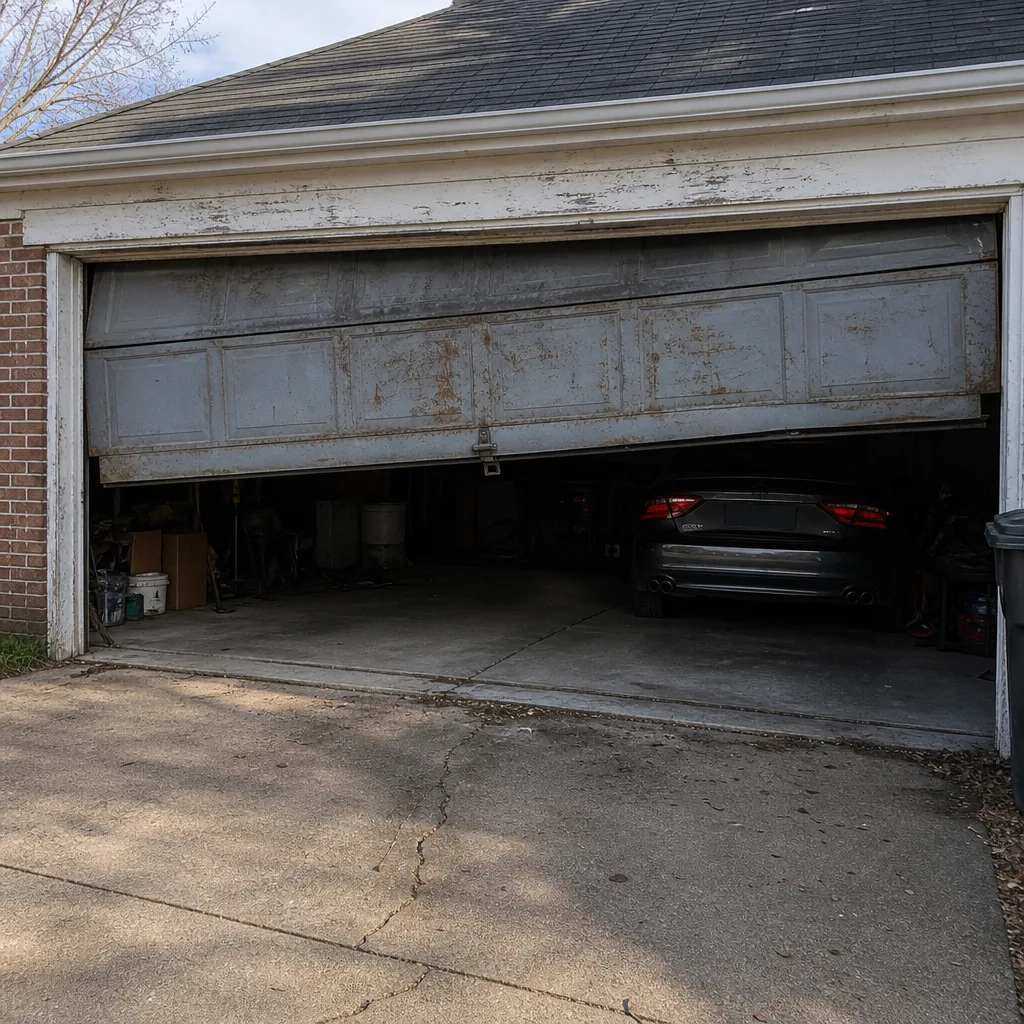 Before
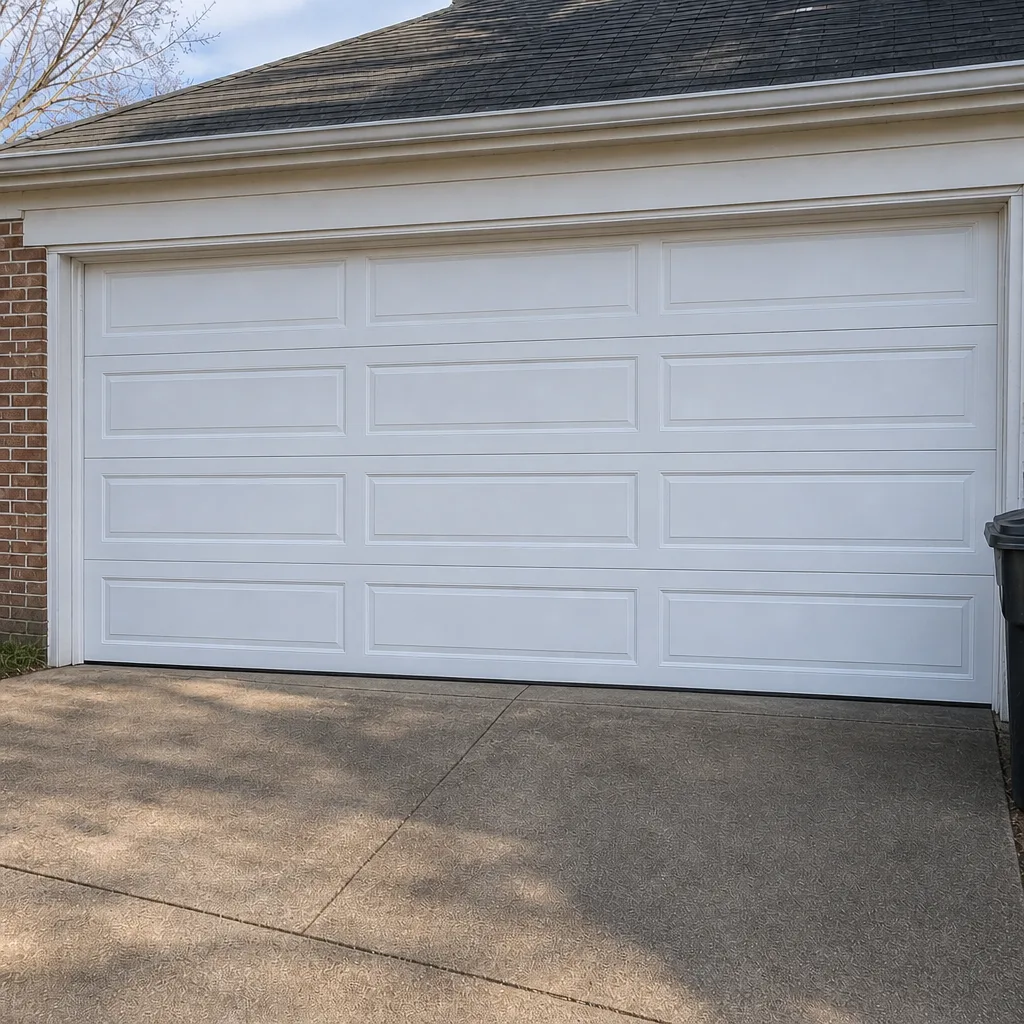 After
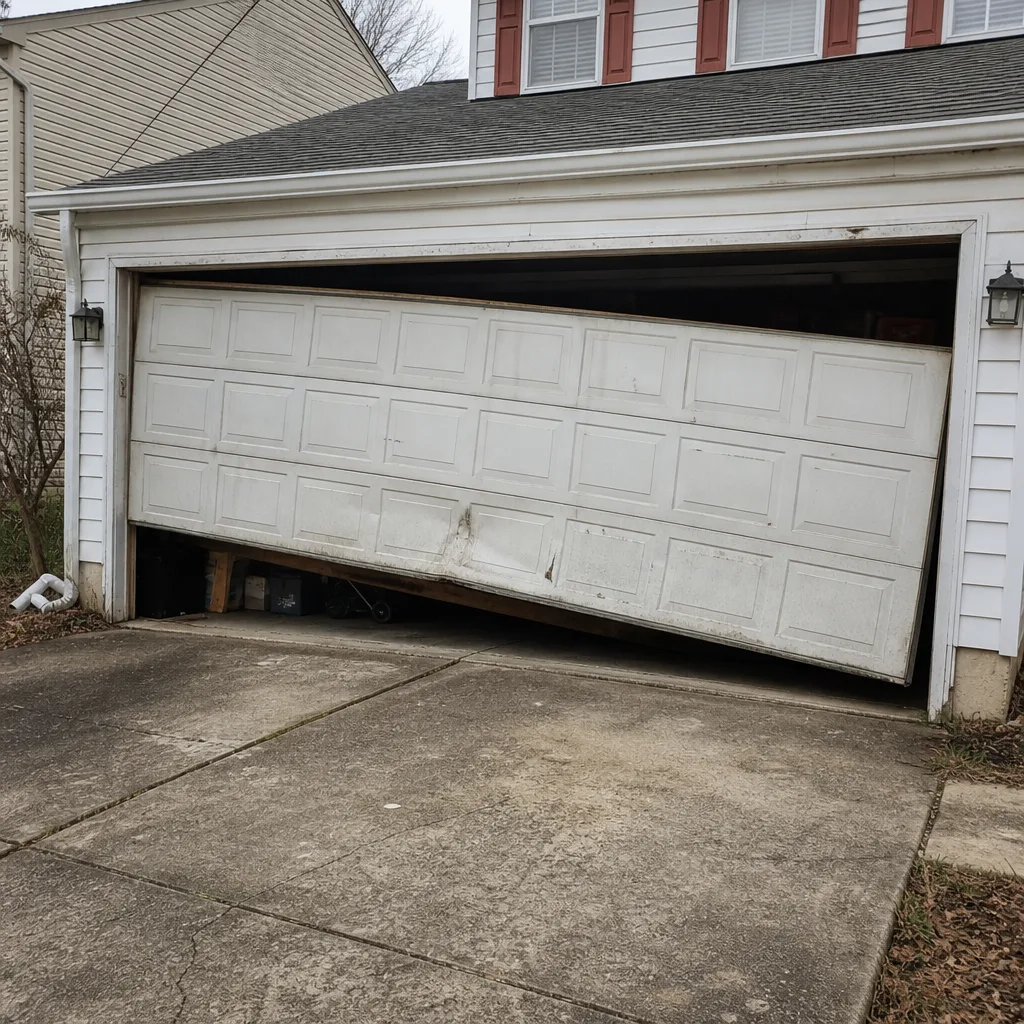 Before
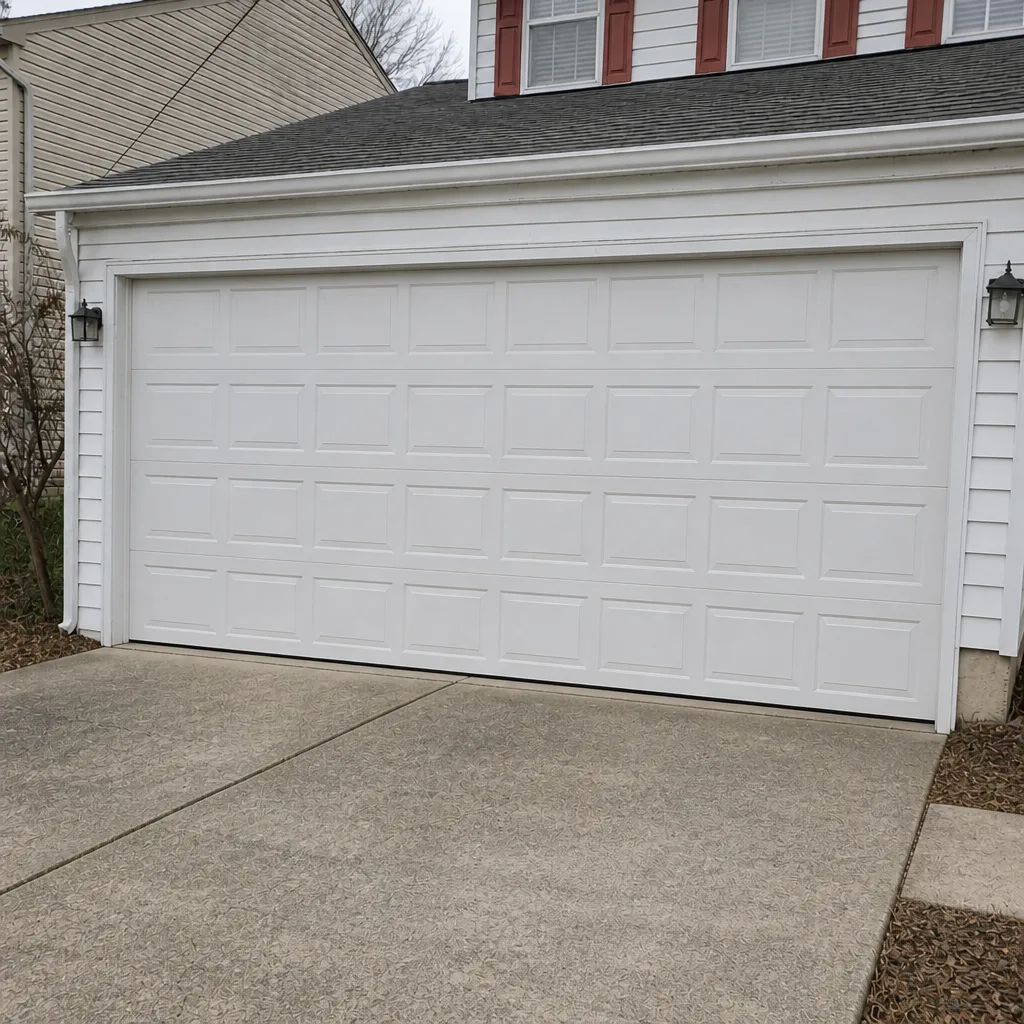 After
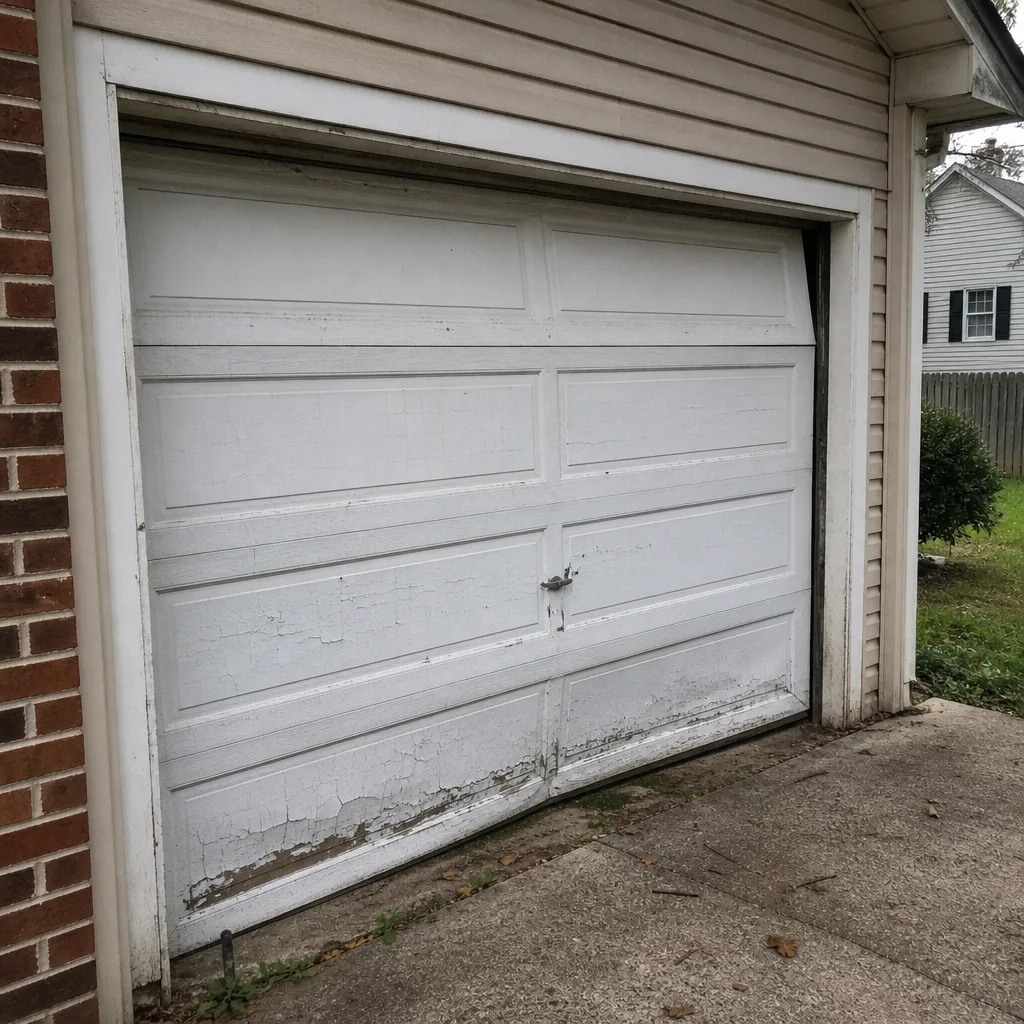 Before
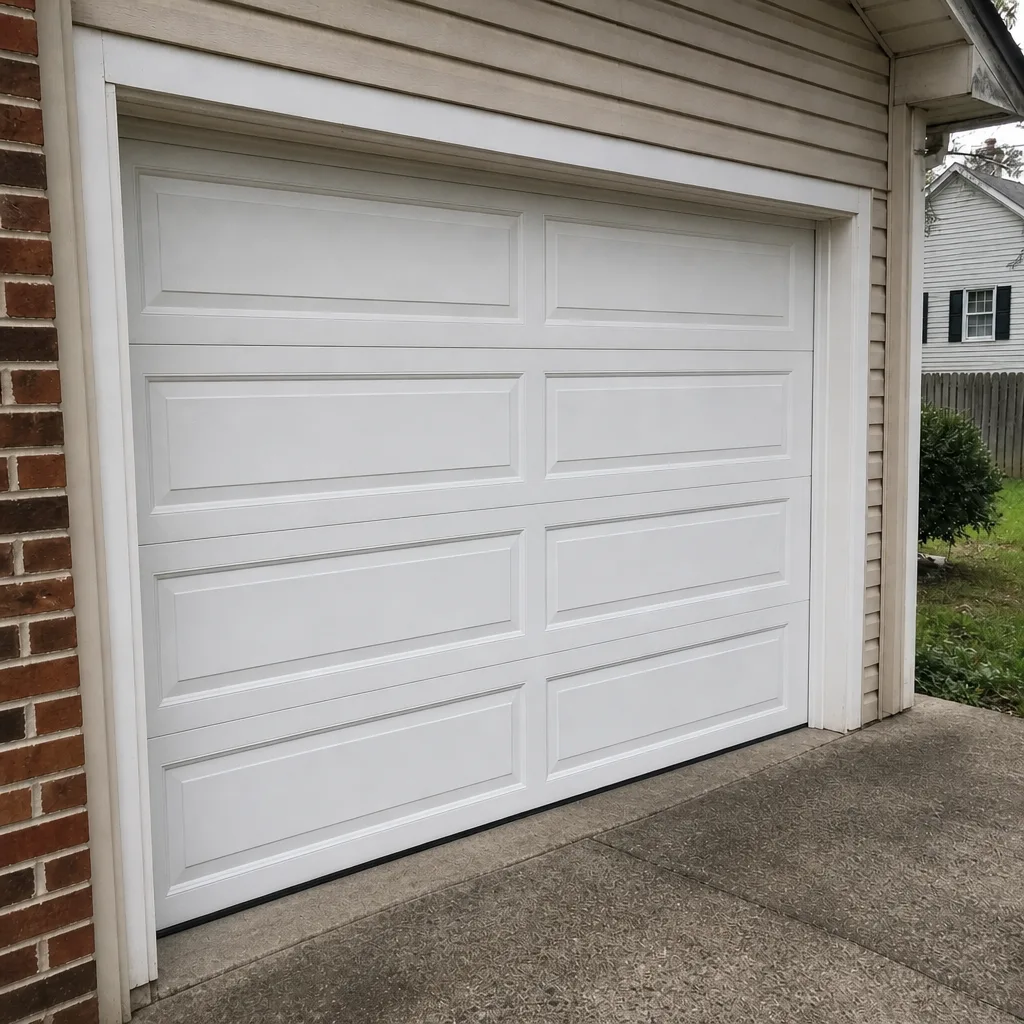 After
When to Call a Professional
Call a professional if a spring has visibly failed, if the door won’t stay up when lifted by hand, if the door comes off its tracks, or if the opener won’t respond and the safety sensors aren’t the cause. Call if a car has bumped the door, if the door drops suddenly when closing, or if you see bent or separated panels. Call for any opener work on a disconnected or discontinued brand, and call for any new installation or opening change so the measurements and the permit question get handled correctly. And call if your door is stuck open or closed and you need it working now; emergency service is a normal part of what we do, not an upsell. Bowie Garage Door Repair Pros offers free estimates in Bowie and same-day service on most repairs, with fast dispatch from 7am to 7pm. Call (833) 754-7945.
Frequently Asked Questions
Torsion spring replacement typically runs $180 – $340 for one spring, and a matched pair usually runs $360 – $680 because both should be replaced together. The exact price depends on the door’s size and spring configuration, and the written estimate you get before work starts is the price you’ll pay. Call (833) 754-7945 for an exact quote, and estimates are free.
Usually, yes. Most repairs we see in Bowie, including spring replacement, opener repair, and track adjustment, can be handled the same day, and we offer emergency service for doors stuck open or closed. Call (833) 754-7945 and we’ll tell you what’s available.
No. We quote and agree on the price before any work starts, and the written estimate sets the final cost. If we find something unexpected during the job, we stop and talk it through before doing anything additional. Call (833) 754-7945 to get an estimate scheduled.
The local professionals we connect you with are licensed and insured as their state requires. Our technicians have up to 9 years of experience, and spring work is handled with the proper tools and training. Call (833) 754-7945 with any questions about credentials before booking.
Yes. Seven-foot doors are still widely available, and the fit issue isn’t the height itself; it’s getting the width, headroom, and spring configuration right for your specific opening. We measure all of those before ordering so the door you get actually matches your home. Call (833) 754-7945 to schedule a free measure and written price.
A like-for-like replacement in the same opening generally doesn’t require a permit, while new installs, opening changes, and electrical work often do. Rules can change, so confirm with the Prince George’s County building department for your address. Call (833) 754-7945 if you’d like a written scope you can take to the county.
We can often still repair it. We service LiftMaster, Chamberlain, Genie, and Craftsman systems, including older legacy openers, along with the other major brands, so a discontinued model doesn’t automatically mean replacement. Call (833) 754-7945 and we’ll tell you what parts and options are available.
The Bottom Line
Garage door decisions in Bowie start with the house. Colonial and split-foyer homes from the 1980s through the 2000s share a narrow set of dimensions, and the 7-foot door, the torsion spring pair, and the headroom above the track are the details that make or break a repair or a replacement. Prince George’s County’s freeze-thaw swings wear out springs and bottom seals faster than homeowners expect, and a seasonal inspection catches most problems before they fail. Repair first, replace when the math says so, and get the measurements and the permit question right before you order anything. Whether you need garage door repair, a new opener, or a full replacement from the brands you already have on your home, our team can help.
Contact Us
Ready to get your door working again or plan a replacement? Call (833) 754-7945 for a free estimate. We’re Bowie Garage Door Repair Pros, and we handle repair, spring work, opener service, installation, and emergency calls for homes across Bowie. Upfront pricing, the price agreed before any work starts, and repair-first advice from technicians who know the brand you already own.
Written by the team at Bowie Garage Door Repair Pros.